
Grief
The resources and information provided on this page are intended for general educational and informational purposes only. They are not a substitute for professional counselling, mental health assessment, diagnosis or treatment. If you are experiencing mental health concerns or emotional distress, you are encouraged to seek support from an appropriately qualified health professional. If you or someone else is in immediate danger, please call 000.
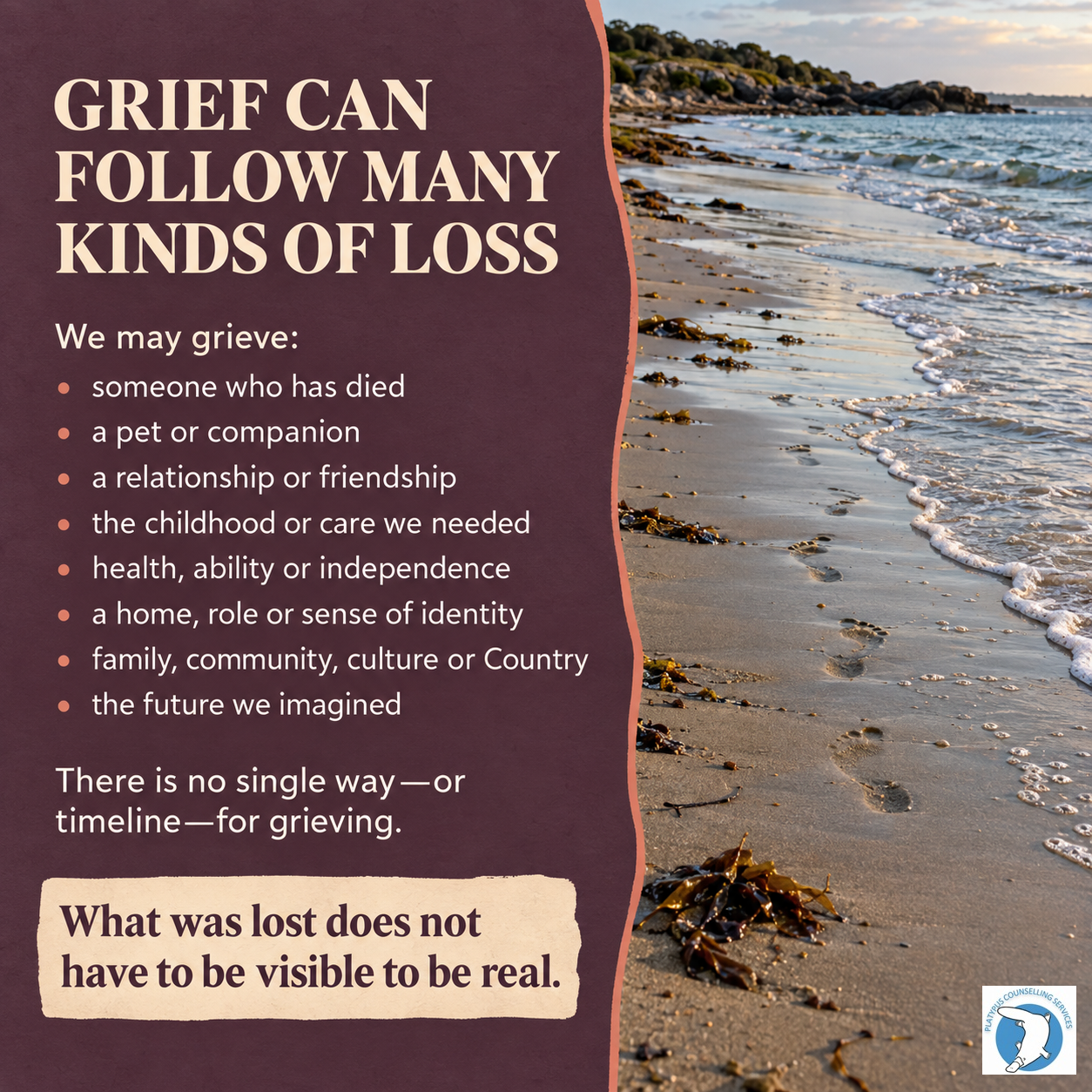
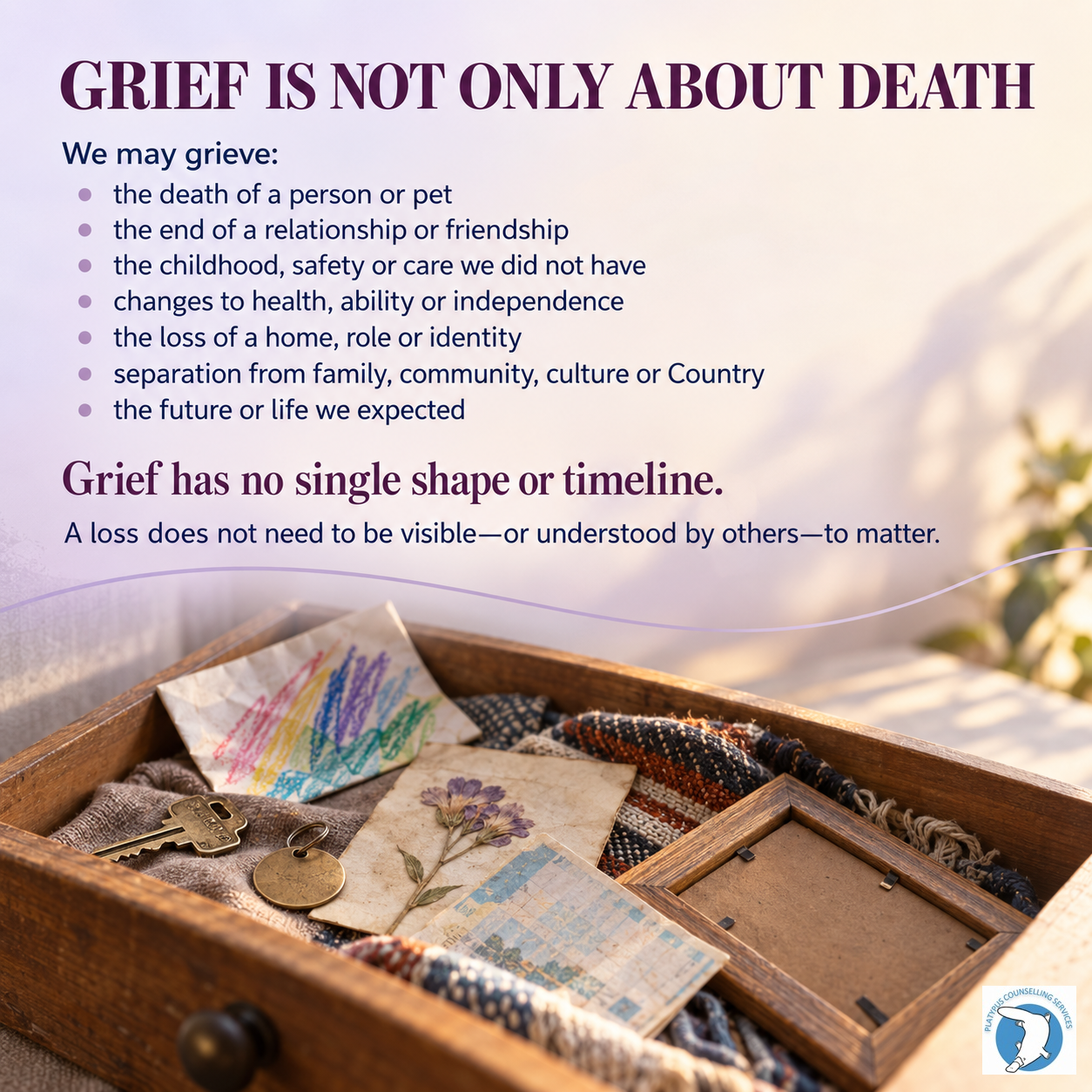
Grief and Loss
Allow yourself to grieve - It is natural to cry. Many people find crying a relief. Exploring and expressing emotions can be a part of the process. Listening to music or writing can help. Time spent alone can allow you to connect with your emotions.
Live one day at a time - Set a regular daily routine and do something special for yourself every day. Try to go for a walk, eat healthily, meditate and relax. It’s a good idea to avoid making any major decisions for a year after the death of someone you love.
Seek help - Talking to your doctor, people at a support group or a relative or friend you trust can be a big help.
Stay connected - It’s also important to spend time with supportive people. Accept offers of help, talk about your loved one, or simply spend time with others.
Create positive memories - Honour the life of the person who has died. Collect photos or keepsakes, write a journal, write a letter to the person who died, or share stories and rituals with others. These can all help to create meaning after loss.
Look after your health - Get some regular exercise, eat healthy food and make sure you have enough sleep. Avoid recreational drugs and keep alcohol use to a sensible level.
Surviving anniversaries - Birthdays, anniversaries or holidays can trigger intense feelings of grief. It may help to mark these occasions with a simple ceremony like lighting a candle, playing music or gathering with family.